
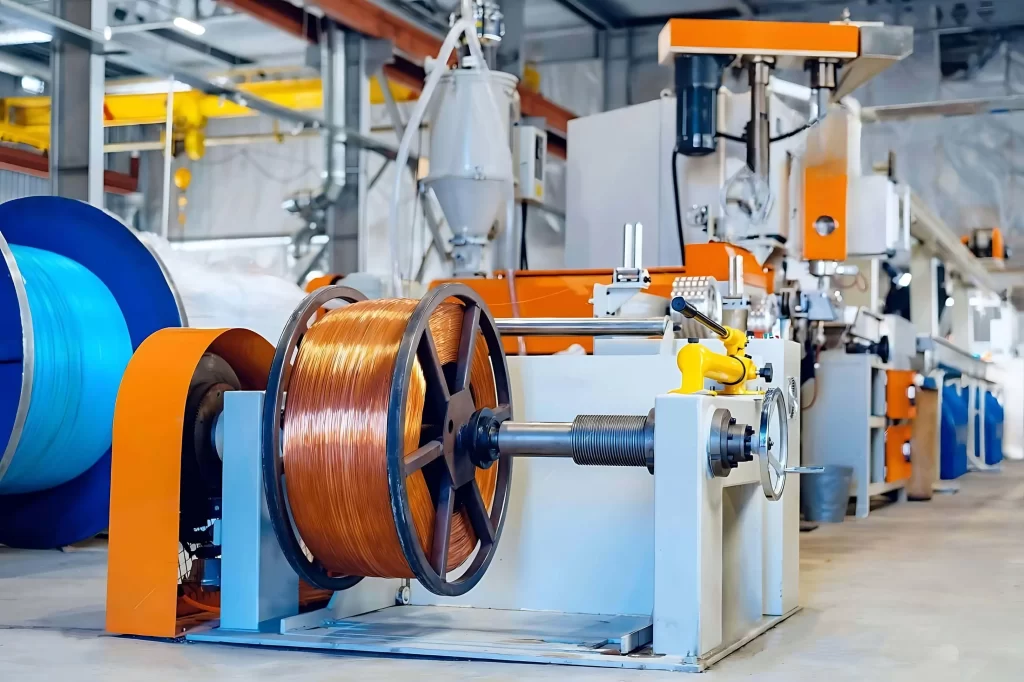
Introduction
Electrical cables are an integral part of modern life. They are used in residential, commercial, manufacturing, renewable energy, and transport industries.
Choosing the right electrical cable manufacturer is becoming an increasingly important choice for companies, contractors, engineers and procurement teams.
When choosing your supplier, you need to take into consideration the production processes, quality of raw materials, cable specification, testing, standards, availability and delivery.
Choosing the right partner means that they will have the capability to understand your technical requirements and supply the correct cables for your application.
In this article we look at the various types of electrical cables available, the manufacturing processes, why quality testing is important and the key considerations when choosing an electrical cable manufacturer in India.
1. What does an electrical cable manufacturer do?
An electrical cable manufacturer will produce electrical wires and cables.
The process will include sourcing the correct raw materials, preparing conductors, wrapping in insulation and assembling the cables. Quality checks and testing are also carried out.
Depending on the type of cables required, an electrical cable manufacturer could produce many types of cables:
- Building wires – these are used in residential and commercial buildings.
- Flexible cables – used in equipment and electrical panels.
- Power cables – used in electrical.
- Control cables – used in machinery.
- Instrumentation cables – used in instrumentation.
- Solar cables – used in photovoltaics.
- Automotive wires – used in vehicles.
- Custom cables – used in specific applications.
Each category of cable will have specific requirements. The manufacturer will ensure cables are suitable for their application.
2. Types of Cables Made in India
In India there are various cable types that will be used within the electrical and industrial sectors.
By understanding the different cable types you can easily identify what cables you need to purchase.
2.1 Building Cables
Building cables are used in domestic, commercial and other building environments.
They link the electrical distribution system to lighting, switches, sockets and devices around the home.
They often contain copper conductors; however, the exact conductor and insulation types will depend on the cable being used.
Consider conductor size, insulation type, voltage rating, temperature rating and standard of cable when purchasing.
2.2 Flexible Cables
Flexible cables are ideal for applications that require flexibility.
They could be used in electrical panels, machine connections, industrial equipment and others.
They may contain multiple strands within the conductor.
Consider conductor design, number of cores, insulation type, usage and movement when purchasing.
2.3 Power Cables
Power cables are used to transfer electrical power. They are widely used in industrial locations, infrastructure, commercial buildings and electrical systems.
They may have different classifications based on their voltage, conductor material, insulation design and protection.
Low-tension (LT) and high-tension (HT) cables are used for differing voltages.
Consider the electrical load, conductor size, voltage rating, installation and protection needed when choosing the correct power cable.
2.4 Control & Instrumentation Cables
Control and instrumentation cables play an important role in industry.
Control cables carry electrical signals to control machines, electrical panels and automated systems.
Instrumentation cables carry measurement and monitoring signals between devices.
They may require specific shielding.
They can often be relevant to manufacturing locations, process industries, automation and industrial control panels.
2.5 Solar Cables
Solar cables are used in photovoltaic applications.
They are used to connect solar panels and other electrical components. The cables should be suitable for the voltage, current, temperature and environment.
Outside cables may require specific UV, moisture and temperature resistance.
Ensure that they have the correct specifications, especially DC connections in photovoltaic applications.
2.6 Automotive Cables
Automotive cables are used in vehicles to connect different electrical and electronic components.
They can be used to carry power or signals between batteries, lighting, sensors, control units and other components.
Requirements will vary depending on the vehicle design, temperature, vibration, electrical load and installation.
Cables should be specifically designed for automotive applications.
2.7 Bespoke Cables
Some industries will require cables that are not available in a standard catalogue.
Bespoke cables can be manufactured to create cables that have been designed for a specific piece of equipment or project.
Depending on the manufacturing capabilities, they can be made with specific conductor design, number of cores, cable size, insulation, shielding or other requirements.
OEMs, machine manufacturers, infrastructure and specialist equipment manufacturers may look into bespoke cables.
3. Understanding the Cable Manufacturing Process
There are many stages involved within the cable manufacturing process:
1. Choosing Suitable Materials
The manufacturing process starts with choosing suitable materials.
Typically copper or aluminium will be used for conductors, and various polymers will be used for insulation and sheathing.
This will depend on what type of cable is being manufactured.
2. Conductor Preparation
The conductor will be prepared for the correct size and build.
Depending on the product, this may include the conductor being drawn down, stranded, etc.
3. Insulation (Extrusion)
Insulation is added by applying the correct material around the conductor.
This will need to have the correct thickness and electrical properties.
By controlling the process, the insulation will have a uniform finish.
4. Cabling
If the cable has more than one core, the individual insulated conductors will be put together or twisted together.
Depending on the build of the cable, additional components may be added, e.g., fillers, screening or protection.
5. Sheathing
Additional protection may be added to the outside of the cable. This will depend on what the cable is designed for.
The material and thickness of the sheathing will depend on the application of the cable.
6. Testing
Once the cable has been manufactured, it will be tested/inspected according to the product specification.
This can include testing the conductor resistance, insulation resistance, high voltage, checking the dimensions, etc.
The exact tests to be carried out will depend on the product category and standard.
Having a well organised manufacturing process means that manufacturers can ensure a consistent product and find any issues during manufacturing.
4. Why Quality Testing is Important
The quality of the cable will directly impact how well the cables will perform electrically and how reliable and safe they will be during installation.
A reputable manufacturer will have the correct quality control processes in place to ensure the cables meet the required specifications.
Some tests would include:
Resistance of conductor – This is to ensure the conductor has an acceptable level of resistance.
Resistance of insulation – This checks for the correct level of resistance in the insulation.
High voltage testing – This ensures the insulation can handle a certain voltage during testing.
Dimensional check – This ensures the conductor, insulation thickness, sheathing thickness and any other measurements are correct.
Mechanical tests – Depending on the product, this will check for certain mechanical properties, e.g., tensile strength, elongation and flexibility.
Depending on the type of cable you wish to purchase, you should ask for the correct technical datasheets and test reports.
5. Important Things To Consider When Picking Your Electrical Cable Manufacturer
There are some key things to consider when looking for a manufacturer.
Manufacturing Processes
Ensure they can manufacture the correct range of cables.
For example, if you are looking at power cables, you could need control cables, flexible cables or bespoke multi-core cables.
Your ideal manufacturer will be able to tell you what they can manufacture and what specifications they can offer.
Materials
Ask what conductor, insulation and other components they use.
They should have the correct specification for your desired cable.
Quality Control
Ask about their quality control processes, testing facilities, calibration and any documentation they may have.
Ask them for relevant test reports, etc.
Standard Compliance
Electrical cables have to comply with standards based on the type of cable and the application they are going to be used for.
Ensure they comply with the correct Indian Standard or other required specification. Ask about the ratings of the product, if it is certified and any technical documents.
Don’t assume all cables from one manufacturer will be to the same standard.
Customisation
If you are looking at specialist cables, ask if they can offer the design, conductor, insulation and build you need.
Speak to them about the technical aspects first.
Supply & Delivery
If you are ordering for a large industrial/infrastructure project, then this is an important consideration.
Ask them about minimum order quantities, manufacturing timescales, packaging, delivery and transportation.
Technical Support
An ideal manufacturer will be able to explain the technical specification of their products and answer any technical questions.
Good communication will reduce any confusion when choosing, quoting, manufacturing and delivering your product.
6. Industries That Depend on Electrical Cable Manufacturers
Electrical cables are essential across a wide range of industries.
| Industry | Common cable applications |
| Construction | Building wires and power distribution |
| Manufacturing | Power, flexible and control cables |
| Renewable energy | Solar PV and electrical power cables |
| Automotive | Vehicle wiring and electrical connections |
| Infrastructure | Power distribution and industrial installations |
| Oil and gas | Power, control and instrumentation systems |
| Commercial buildings | Lighting, equipment and electrical distribution |
Each industry has different operational and environmental requirements. Therefore, cable selection should always be based on the actual installation and technical design.
7. Why Choose Flashtronics Technologies?
Flashtronics Technologies provide electrical wires and cables for a variety of industries including residential, commercial, industrial, infrastructural, renewable energy, automotive and OEM solutions.
Their website provides information on the range of products they can provide such as building wires, flexible cables, power cables, control & instrument cables, solar cables, automotive wires and bespoke cables.
They provide the following services:
- Wire and cable manufacturing
- Bespoke cable design & OEM solutions
- High Voltage Testing
- Insulation Resistance Testing
- Conductivity Testing
- Dimensional Testing
Flashtronics Technologies
This is useful information for those looking to purchase cables.
Before purchasing a product you should provide the team with information regarding your requirements, conductor type, voltage rating, amount of cable needed and any standards.
8. FAQs
1. What are Electrical cable manufacturers?
These are manufacturers of cables used for power distribution, connecting equipment and control. They assemble wires/cables by preparing conductors and insulating before assembling cables, sheathing and testing Quality.
2. How do you choose a good Electrical cable manufacturer in India?
Look at what products they have available to make, the materials they have to produce them with and how they will test their quality. Also look at the availability of customisation, raw materials, compliance paperwork, manufacturing ability and reliable delivery.
3. What are common types of electrical cables?
Building wires, flexible cables, power cables, control cables, instrumentation cables, solar cables or automotive wires.
4. Why is it important to test cable quality?
You can check cables are doing what they are supposed to by what ever electrical, physical or mechanical requirements they have. They can also find out if there are issues with manufacturing.
5. Do manufacturers offer custom cables?
Some offer cables that can be customised to fit your needs. This can include cable design, number of cores, insulation and more. You will need to make sure they can do this and what the minimum order amounts are.
6. What industries use Industrial electrical cables?
Industrial, construction, green energy, automotive, infrastructure, transport and process industries all use electrical cables.
For further information regarding their wires & cables please visit Flashtronics Technologies.
Conclusion
Choosing the correct manufacturer for your electrical cables is an important decision to make for your business, contractors, OEMs and industrial projects.
The correct manufacturer will have the cable types you need, correct raw materials, quality management system, technical documents and ability to produce according to your requirements.
Learning about the manufacturing process and understanding what factors need to be considered, such as quality of conductor, insulation, cable build, testing and delivery can help you make the right purchase decisions.
Flashtronics Technologies has a wide range of wire and cable solutions. View our products and get in touch with our team to talk through your electrical cable needs.